
The library
- 9,000+ dog and cat foods in the library
- 16 plain-language nutrition guides
- 11 home-cooked dog recipes, weighed from USDA data
- FDA pet food recalls, searchable by the name on the package
- 4 life-stage factors for dogs and for cats
Scoops works out how much of your pet’s actual food to feed, from their weight, life stage and the calories in your food. It keeps that plan with each pet, beside the food’s ingredients and recall history and dated check-ins on how they’re doing.
Veterinary clinics use the same plans in the clinic workspace, at $49 a month for the whole team, while owners use Scoops free. So the amount worked out in the exam room is the amount that reaches the bowl.

The chart on the back of a bag gives one range of cups for every dog in a weight band. Your pet has one weight, one life stage and one food, so Scoops works out one amount and shows how it got there.
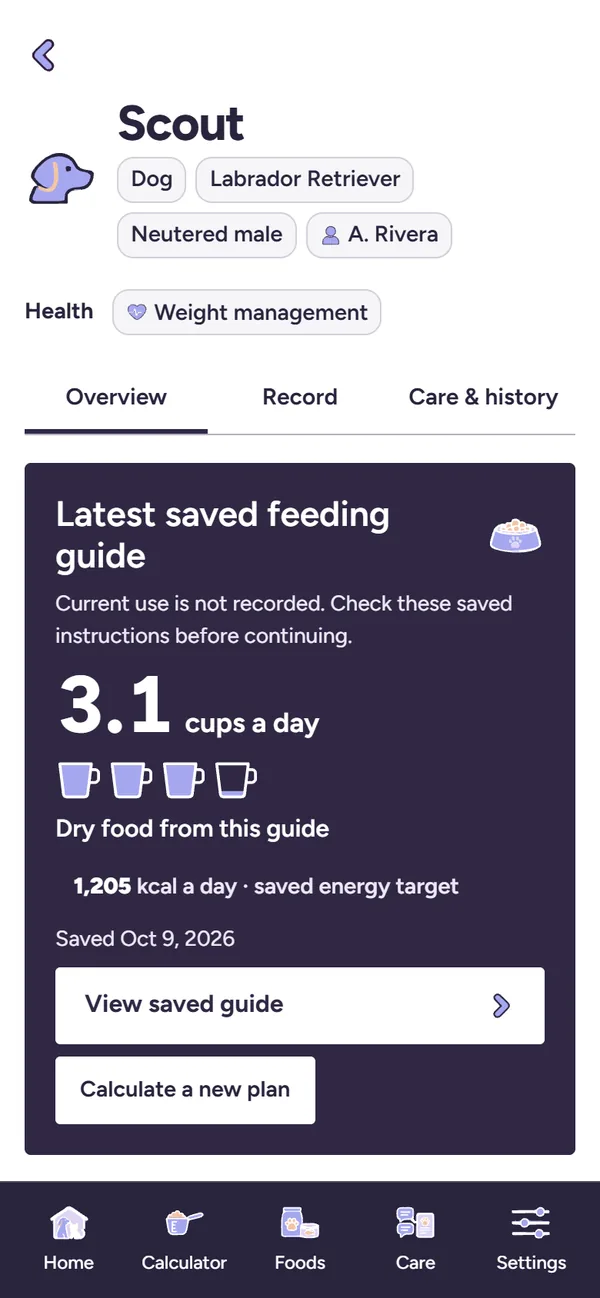
Every amount comes with its basis: your pet’s weight and life stage, the day’s energy and your food’s calories.
Calories from the maker or retailer, recalls from the FDA and recipe nutrients from USDA data, each marked on the page.
Send a saved plan to your veterinary clinic with a question, and their answer comes back attached to it.
“Scoops provides feeding calculations, food information and client communication tools for dogs and cats. It supports veterinary care; it is not veterinary advice, diagnosis or treatment and does not replace an examination by a veterinarian.”
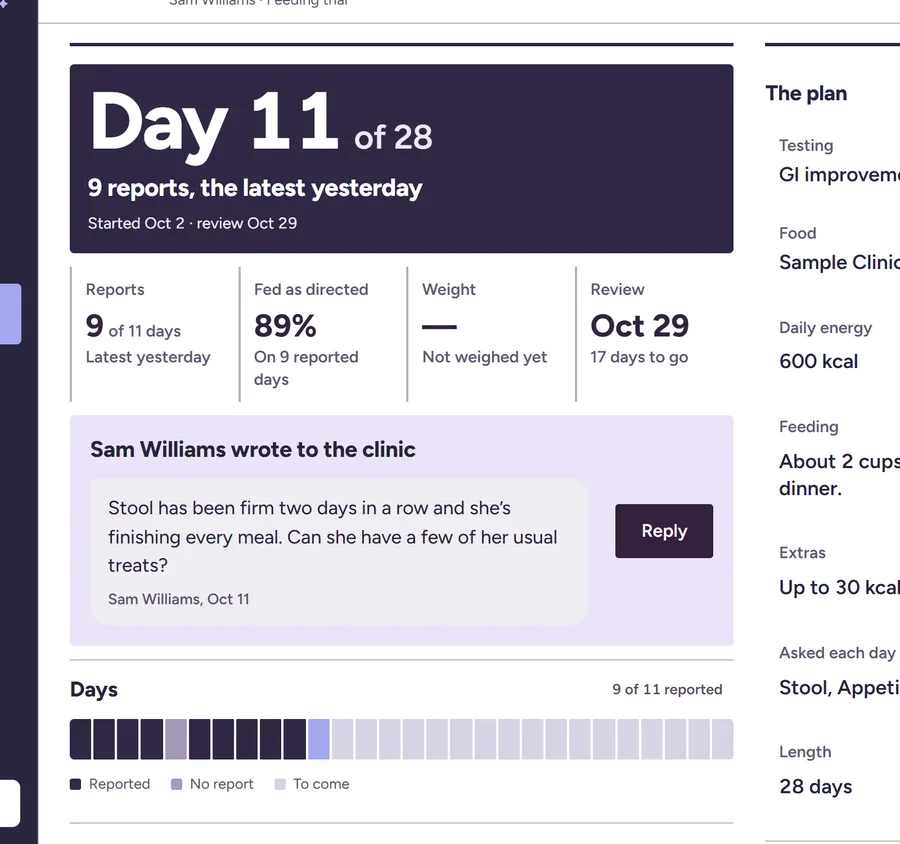
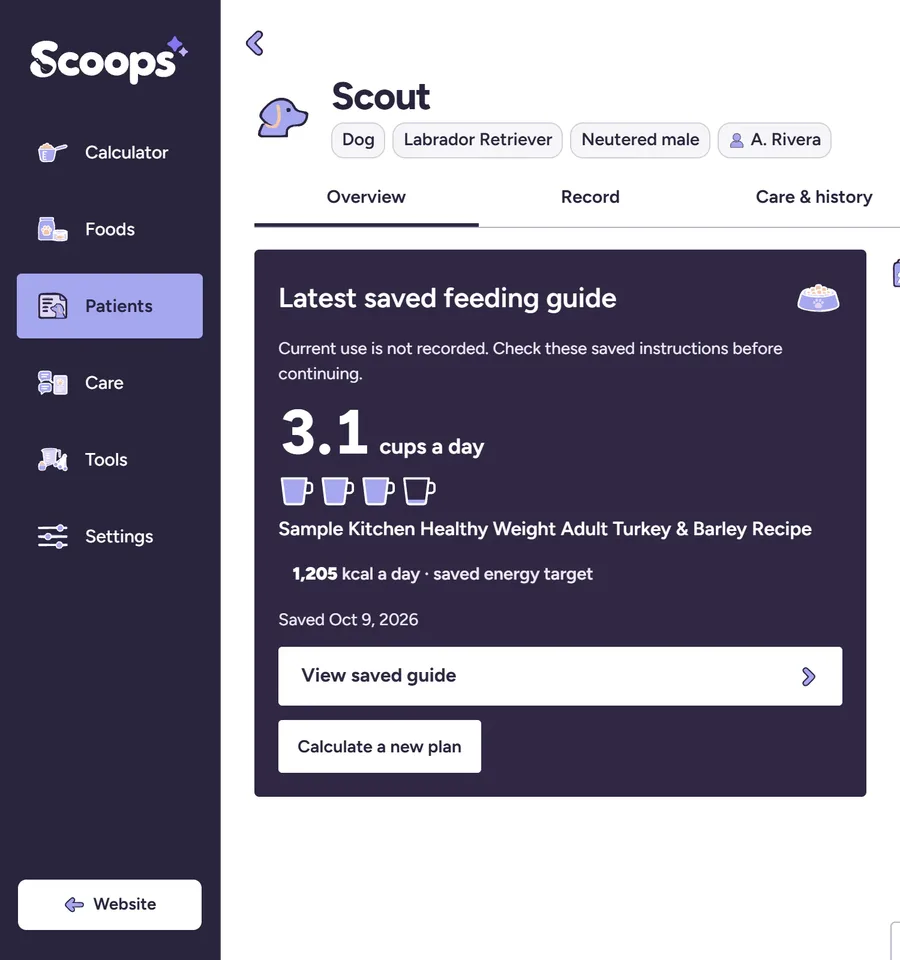
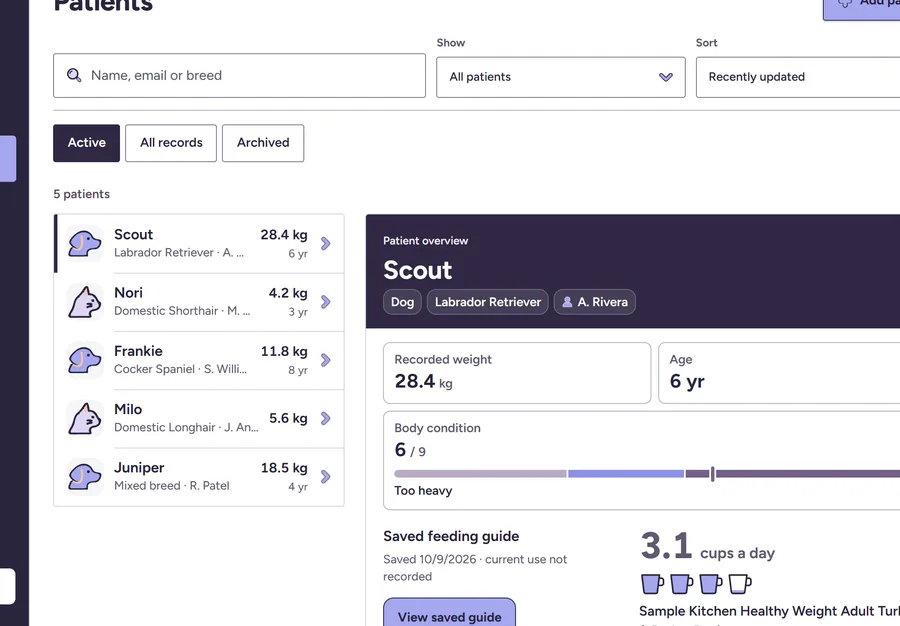
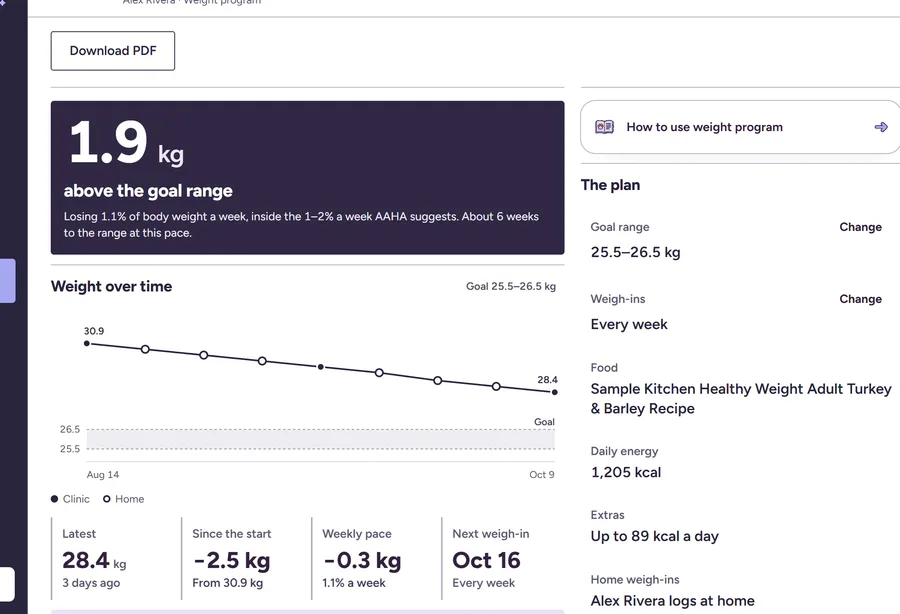
Clinics work out the plan in the exam room, send it home on their own letterhead, and see the owner’s check-ins and questions against it.
See what the workspace includes on Scoops for clinics.
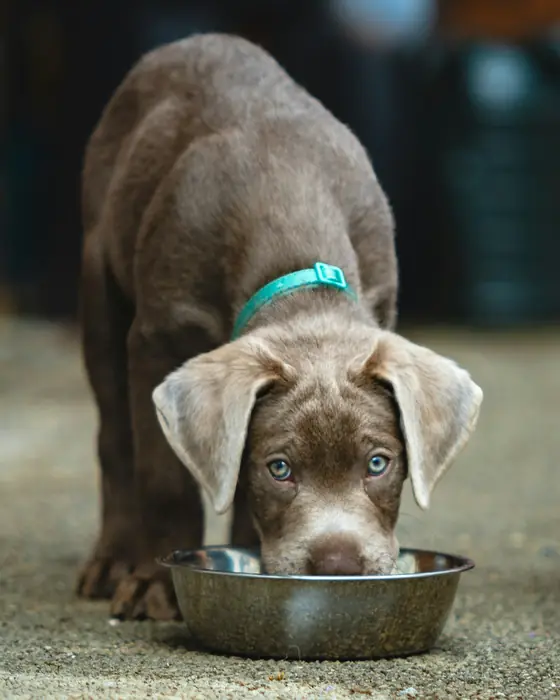
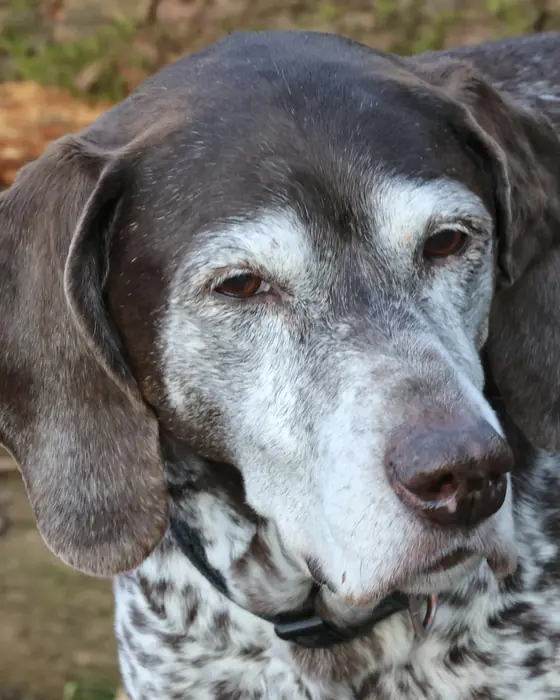
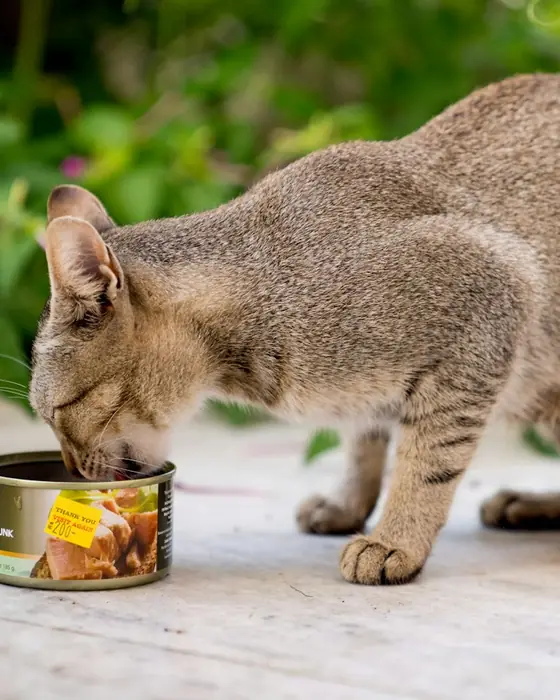
16 plain-language guides to labels, diets, treats and switching food.
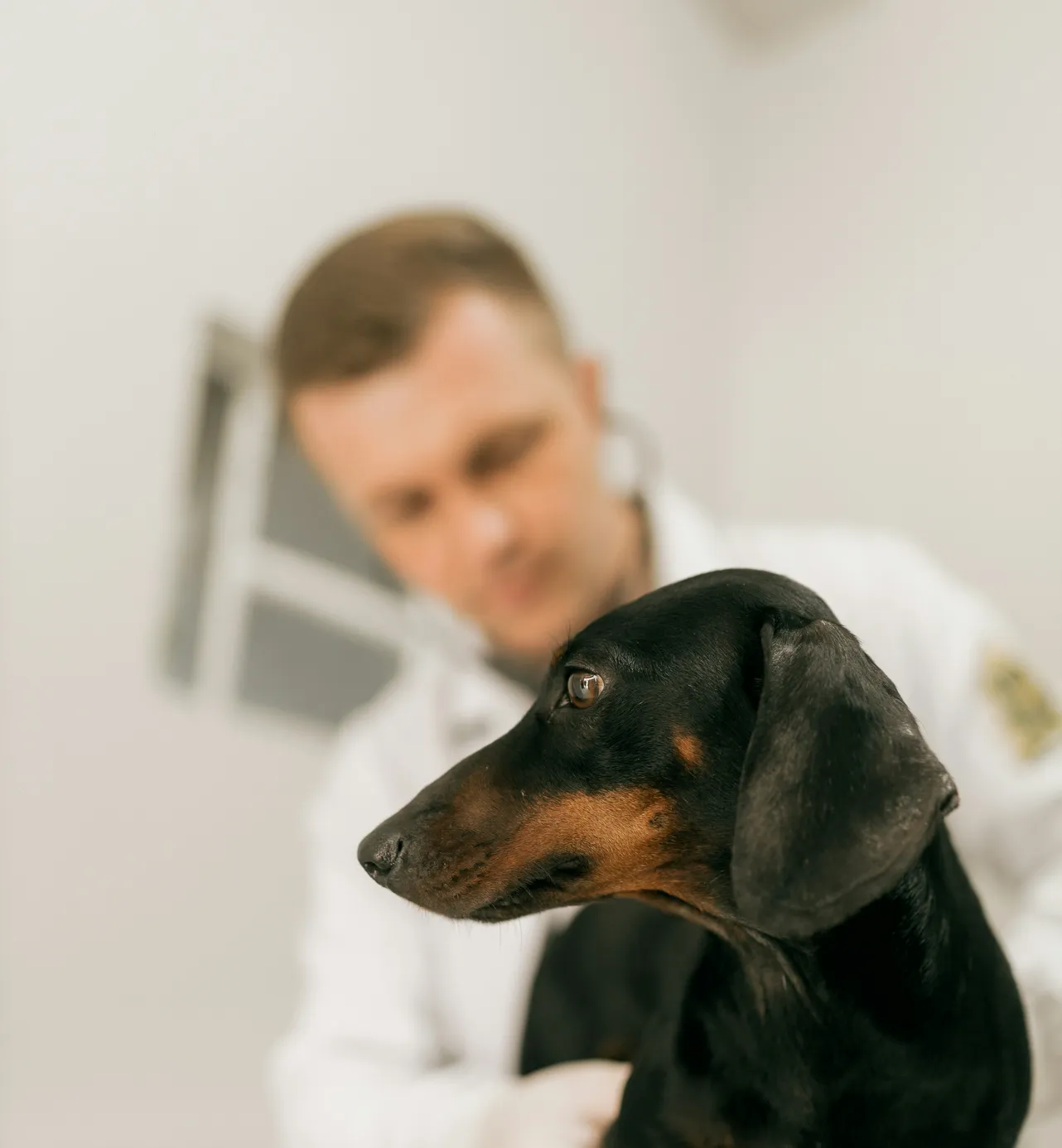
A bag’s feeding chart is written for every dog in a weight band. On a typical chart, the top of the 21–35 lb range is 47% more food than the bottom, and every dog in that band gets the same advice.
We built Scoops to work out one amount for one pet, keep it with that pet’s food and check-ins, and let the owner and their clinic see the same plan.

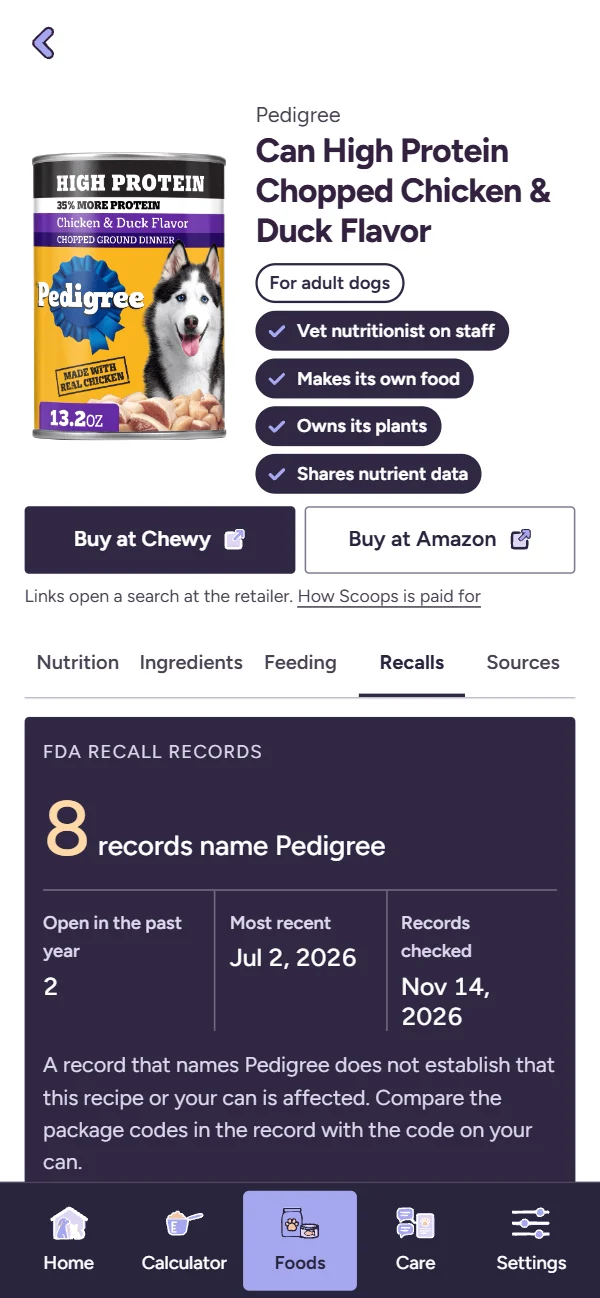
Clinic subscriptions and retailer links on food pages pay for Scoops. A link never changes what Scoops says about a food, and prescription diets carry none.
See how Scoops is paid for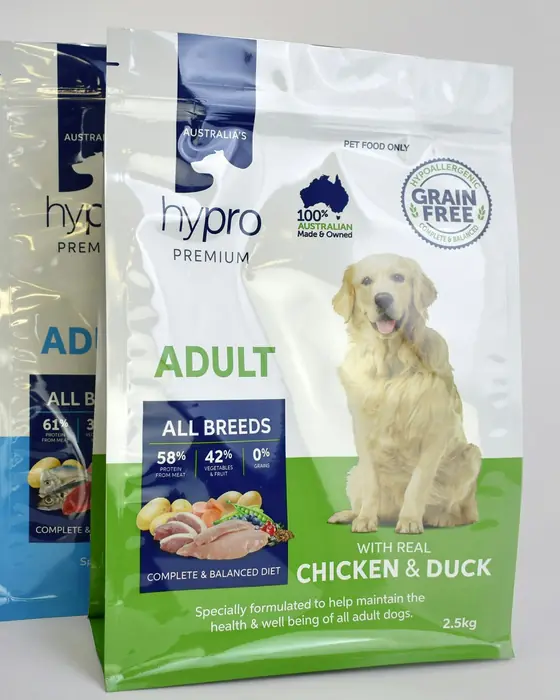 How to read a pet food labelRead the guide
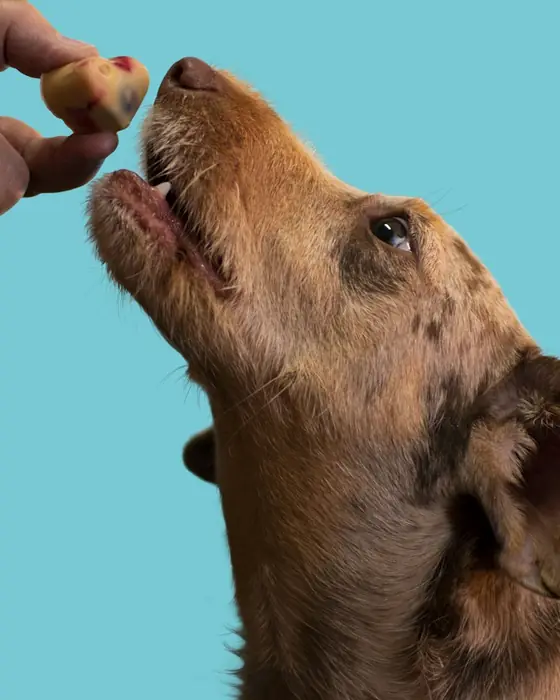 Include treats in the daily calorie budgetRead the guide
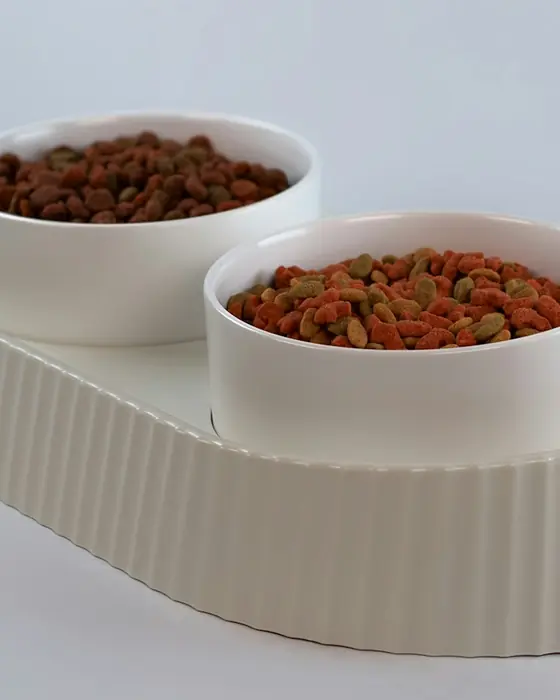 Planning a change of foodRead the guide
Pet owners, free for every pet in the household, and veterinary clinics, at $49 a month for the whole team. Pricing
No. It gives a starting estimate and shows how it was worked out. It doesn’t diagnose, treat or prescribe, and an amount your veterinary team sets comes first. How Scoops calculates
Calories per cup or can come from the manufacturer or retailer, recall notices from the FDA and recipe nutrients from USDA data. Each food page shows its sources. Food library
Only you, until you choose to connect a clinic. Choosing a clinic is private, and nothing is sent to them until you ask to connect. Privacy
Use the contact form for a question about Scoops, a problem with a food record or a question from your clinic. Contact Scoops